
Understanding Lowland Heathland Ecology for Gardeners and Growers
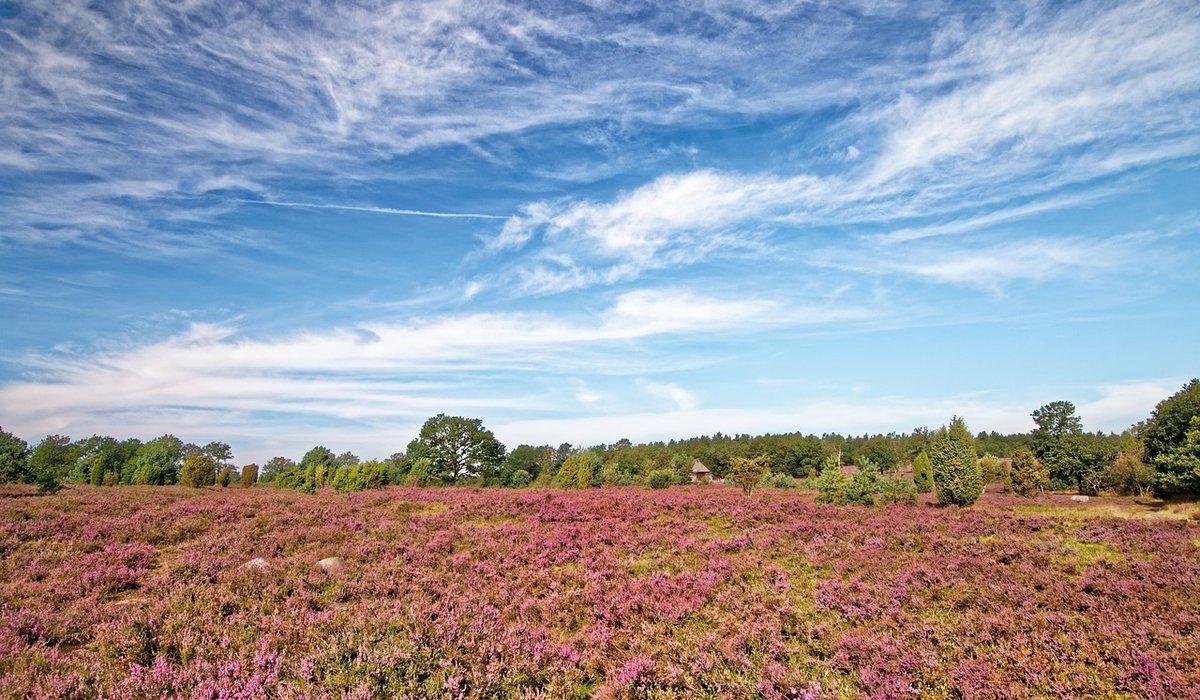
Lowland heathland is one of the most distinctive landscapes in Britain: a low, open sweep of purple, gold and grey-green that hums with bees in August and looks almost Mediterranean on a hot day. It is also one of the rarest habitats in the world, and Britain holds a substantial share of what survives. Roughly four-fifths of our lowland heath has gone since 1800. Understanding how it works is the first step to growing its plants well — whether in a garden, an allotment edge, or a dye pot.
What Makes Lowland Heath So Distinctive
Start with the soil. Lowland heath sits on free-draining, acidic, nutrient-poor ground: sands, gravels and thin peaty tops over an ironpan layer that stops water draining away. The classic soil is a podzol, with a bleached ash-grey band beneath dark surface humus. Rainfall is usually generous, and the climate is oceanic — mild, damp, western.
The crucial rule is no lime and no fertiliser. Heath plants are adapted to scarcity. Enrich the soil even slightly, and the dwarf shrubs that define the habitat are outcompeted by coarse grasses, bracken and scrub. That fragility runs through everything else on this list, including how you garden with these plants.
The Dwarf Shrubs at the Heart of the Habitat
- Heather (Calluna vulgaris) — the dominant species. A woody evergreen with tiny scale-like leaves, flowering purple-pink from July into September. It lives roughly thirty to forty years and passes through pioneer, building, mature and degenerate stages, each used by different wildlife.
- Bell heather (Erica cinerea) — deeper crimson-magenta and earlier, flowering from June. Prefers drier, steeper, better-drained slopes and is more drought-tolerant than heather.
- Cross-leaved heath (Erica tetralix) — paler pink, with grey glaucous leaves in whorls of four. It likes the damp, boggy hollows and transitions into mire.
- Dwarf gorse and western gorse — spiny, yellow-flowered, nitrogen-fixing shrubs that form the scrub patches woven through the heath.
- Bilberry — appearing where the ground rises and shade increases, often on heath edges.
- Alongside these: bracken, purple moor-grass, tormentil, heath bedstraw, and an extraordinary flora of mosses and lichens.
The Management Cycle That Keeps Heath Open
Heath does not maintain itself. Left alone, birch, pine and gorse move in and woodland returns within a few decades. What keeps heath open is a cycle of disturbance: grazing by cattle, sheep or ponies, plus cutting or burning small blocks on a rotation — often ten to twenty years — so that heather of different ages always exists side by side.
That age mosaic is the whole point. Pioneer heather offers tender shoots for grazers. Mature heather gives cover and nesting sites. Degenerate heather, collapsing and opening up, exposes bare ground that suits basking invertebrates and reptiles. Open ground is also where annual plants and warmth-loving insects get their chance, which is why conservationists sometimes strip turf deliberately to reset a patch to bare, hungry soil.
Balance matters. Overgraze and heather is nibbled down into grass; undergraze and scrub swallows the site. The best heaths look slightly scruffy and clearly worked.
Why It Is So Rare, and So Fragile
Lowland heath is largely a human creation. Prehistoric and later woodland clearance, combined with centuries of grazing and the harvest of heather, gorse, turf and bracken for fuel, bedding and thatch, kept the landscape open. When those practices faded in the twentieth century, heath was either planted with conifers, built over, or converted to farmland. Atmospheric nitrogen deposition from farming and traffic adds a slow, invisible enrichment that favours coarse grasses.
The result is a habitat that is both rare and easily damaged. A single tipped barrow of grass cuttings or a dose of general-purpose fertiliser can shift a patch of ground permanently towards rank grass. Treat every heathland soil as though it were a bank account with a very low overdraft.
Growing Heath Plants in Your Own Garden
You can recreate the essentials at home. Choose the sunniest spot you have and use ericaceous compost, ideally peat-free, mixed with sharp sand and horticultural grit for drainage. Aim for a soil pH between about 4 and 5.5. Water with rainwater rather than tap water where the local supply is hard, and never lime the area.
Plant Calluna, bell heather and cross-leaved heath together, with a dwarf gorse or two for structure and early yellow flowers. Keep the regime lean: no manure, no general fertiliser, no rich mulch. A light top-dressing of composted pine needles or bark is plenty. Trim heather with shears in March, cutting just below the spent flowers — but never into old, bare, leafless wood, because Calluna will not reshoot from it. Work on a rotation, trimming part of the patch each year, so you always carry a mix of ages.
Dyeing with Heathland Plants
Heathland plants have a long dyeing history. Heather tops and flowering tips give warm yellows, ochres and soft greens; with an alum mordant you get a gentle yellow-green, and an iron after-bath pushes it towards olive and deep grey-green. Bell heather flowers give a stronger, slightly cooler yellow. Gorse flowers yield a bright, clean yellow, while gorse bark and trimmings produce yellow-tans and, with iron, rich dark greens and browns. Bilberry leaves give greens; the berries give purples and blues, though these fade quickly in light.
One firm rule: never wild-harvest from a heathland site. These are protected, slow-growing plant communities. Grow your own heather, or dye with prunings from your garden and gorse trimmings taken elsewhere. A small dyer's heath patch, managed on the same rotational principle as the real thing, gives you colour year after year without taking anything from the wild.
Think in cycles rather than seasons, and the habitat starts to make sense: cut here, leave there, let one patch grow old while another begins again. It is a way of gardening that rewards patience and pays back in bees, colour and a landscape that is unmistakably British.


Local seed helps preserve the character of a heathland site. Find out how to collect, store and sow provenance seed for small-scale restoration work.
With careful selection, heathers can provide flower and foliage interest across seasons. Choose varieties suited to your soil and available sunlight.
Ground-nesting birds are vulnerable in spring and summer. Keep to paths, control dogs and avoid disturbing fragile heathland vegetation during nesting months.
A native border can be colourful, tidy and rich in wildlife. Combine flowers, grasses and shrubs that provide food and shelter through the year.