
Why Heather Thrives on Acidic Soils and Open Sites
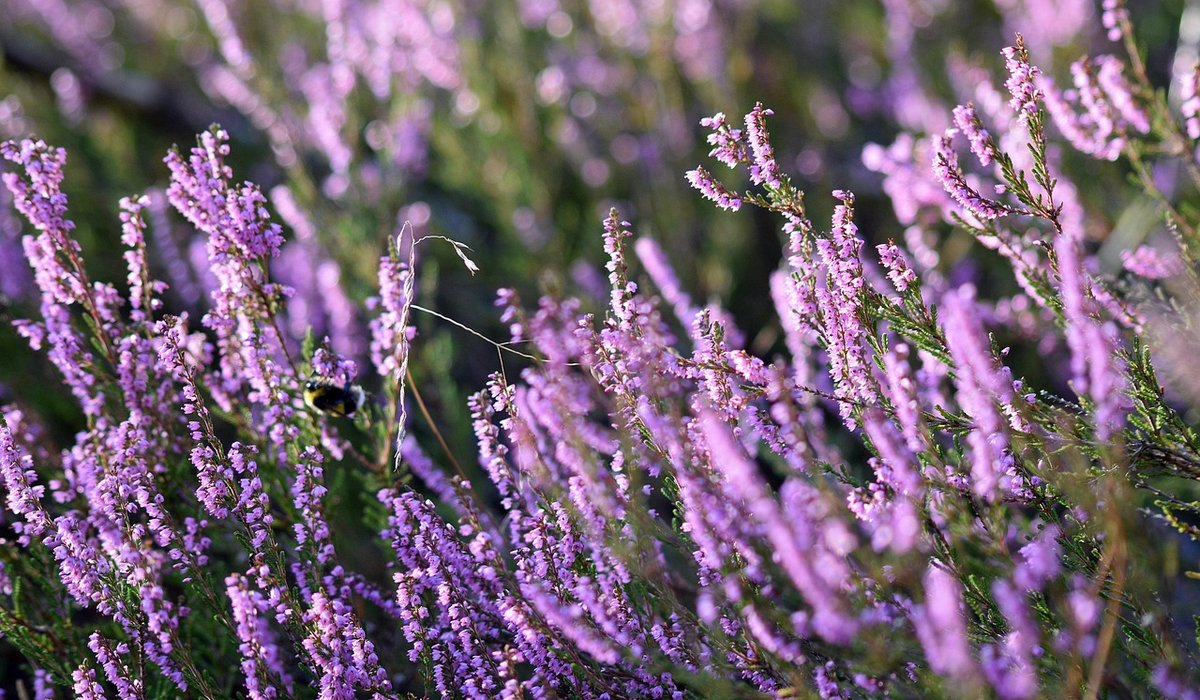
A Plant of Poor Ground, Not Rich Borders
Heather has a reputation for being tough, and it is — but toughness of a particular kind. Our native heathers, chiefly Calluna vulgaris (ling), Erica cinerea (bell heather) and Erica tetralix (cross-leaved heath), did not evolve to compete on fertile ground. They evolved to survive where almost nothing else will: thin, leached, acidic soils, high rainfall, grazing pressure and relentless light. Give them those conditions and they will romp away. Give them a rich, limy border with a bit of dappled shade and they will sulk, yellow and quietly die over two or three seasons, leaving you convinced you have "bad luck with heather".
Understanding what these plants are adapted to makes the difference between a patch that lasts decades and one that quietly fails.
What Acidic Actually Means for Heather
Acidity is not a single thing; it is a chemistry that changes what a plant can take up. On neutral to alkaline soils, iron and manganese lock up and become unavailable, while calcium is plentiful. Heathers are adapted to the opposite arrangement. They expect iron to be freely available and calcium to be scarce, and when planted on chalk or limestone they suffer classic lime-induced chlorosis: foliage turns pale yellow, growth becomes spindly, and the plant declines.
They also carry a partnership that makes fertiliser a liability. Heather roots form ericoid mycorrhizas — fungal associations that help them extract nitrogen from stubborn, low-quality organic matter such as raw humus and bracken litter. Feed the soil with manure, mushroom compost or bonemeal and you upset that arrangement, encouraging soft growth, weeds and fungal trouble. Aim for a soil pH of roughly 4.0 to 5.5 for the best results; Calluna will tolerate up to about 6.5, but above that you are fighting a losing battle.
Practically speaking, that means:
- Test the pH before planting, using a simple probe or a soil-test kit, and test in more than one spot.
- Avoid lime, bonemeal, wood ash and spent mushroom compost entirely.
- On chalk or heavy clay, grow heathers in raised beds or containers filled with ericaceous compost, rather than trying to acidify the ground permanently.
- Mulch with pine needles, bracken litter, leaf mould from oak or birch, or well-rotted conifer bark — materials that keep the surface acidic and open.
- Keep heather away from the lime-leaching zone beside new concrete, mortar rubble or old walls.
Light, Air and the Open Site
Heathers are plants of the open sky. Full sun is not a preference but a requirement: shaded plants grow tall, thin and gappy, flowering sparsely, and they never develop the dense mat that makes a heath look like a heath. Six hours of direct sun is a reasonable minimum, and more is better.
Air movement matters too, though not harsh exposure. On a heath, wind keeps the canopy dry and discourages the fungal problems that plague crowded, stagnant plantings. What heathers cannot abide is being swamped by taller, coarser vegetation. Bramble, gorse, bracken and coarse grasses will out-compete young plants within a season, so site preparation is largely about clearing and then keeping on top of the competition for the first two or three years.
If you are restoring a patch of degraded heath, the principle is the same: reduce the rank growth, expose mineral soil or thin humus, and let light reach the ground. Heather seed can remain viable in the soil for decades, and a scarified, opened-up surface often brings it back without any planting at all.
Water, Drainage and the Moorland Pattern
Heathers dislike both extremes. Calluna and Erica cinerea want a soil that is moist but never waterlogged; Erica tetralix is the odd one out, happy in damp, peaty, periodically flooded ground and a useful choice for wet hollows and the edges of ponds on acid sites.
Aim for a freely draining, humus-rich, sandy or peaty medium. On heavy clay, break up the pan, add grit and organic matter, and plant slightly proud of the surrounding soil so water never sits at the collar. On sandy ground, work in leaf mould or composted bark to hold moisture through summer.
Planting and Establishing Heather
Plant in early autumn or early spring, when the soil is warm and damp but not frozen. Plugs and small pot-grown plants establish far better than large specimens. Space them at roughly 20 to 30 cm apart for a mat that knits together within three years — closer in a garden setting, wider on a restoration site.
Water through the first two summers, then leave them be. Once established, heather needs remarkably little: no feeding, no fussing. The one essential job is management by cutting. Left alone, Calluna becomes woody and leggy at around fifteen years and loses its vigour. Cut on a rotation, taking no more than a third of a stand in any one year, in late winter or early spring after the seed has dropped. Cut back to about 10–15 cm above ground, using shears, a brushcutter or a mower set high. Never cut into the oldest, bare wood on ancient plants — they will not reshoot from it.
Heather in the Dye Pot
For dyers, heather is a rewarding plant precisely because it grows well on poor ground. Material from a healthy, sunlit stand gives far better colour than anything from a shaded, struggling plant, so getting the growing conditions right feeds directly into the dye pot.
Gather flowering tops in high summer for soft purples, pinks and mauves from the flowers, and tips in spring for yellow-greens. The plant is rich in tannin, so colours tend to be warm and somewhat muted — beautiful, but rarely bright. Two to four parts fresh plant material to one part fibre is a sensible starting ratio. An alum mordant gives soft purples and greens; an iron after-bath shifts everything towards deep olive, grey-green and slate. Bell heather and cross-leaved heath both work well, and old woody stems can be simmered for tan and brown tones. Leave plenty behind on the plant and never strip a wild stand bare — the same restraint that keeps a heath healthy keeps it there for next year's dyeing.


With careful selection, heathers can provide flower and foliage interest across seasons. Choose varieties suited to your soil and available sunlight.
Ground-nesting birds are vulnerable in spring and summer. Keep to paths, control dogs and avoid disturbing fragile heathland vegetation during nesting months.
A native border can be colourful, tidy and rich in wildlife. Combine flowers, grasses and shrubs that provide food and shelter through the year.
Recreate the open feel of heathland with gravel, low shrubs and subtle colour. This approach suits sunny, free-draining sites and needs modest watering.